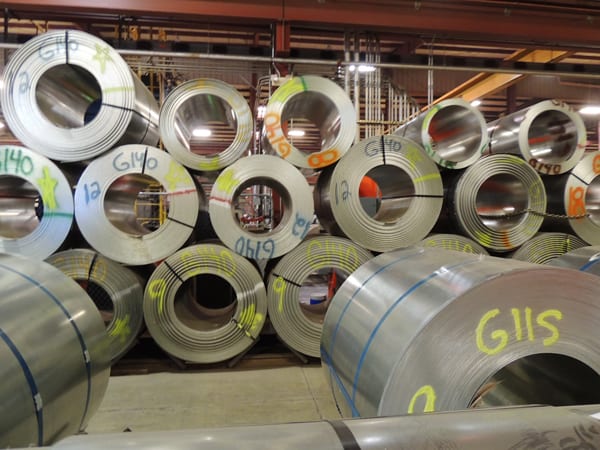
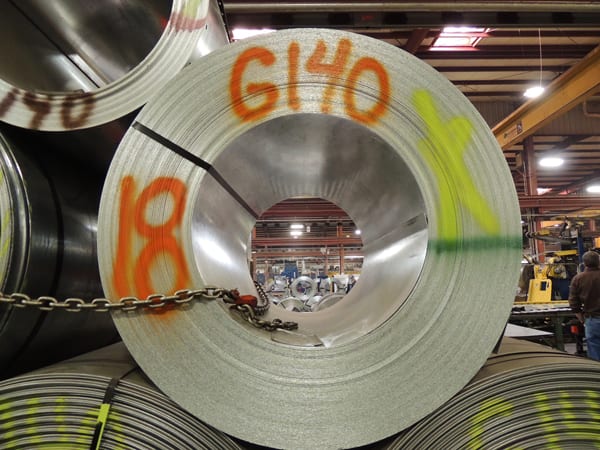
Galvanization grades G90, G115, and G140 refer to the minimum zinc coating weight in ounces per square foot (oz/ft²) on both sides of the steel sheet, as defined by ASTM A653 standards. The corrosion resistance is a direct, linear function of this coating weight, meaning a higher number provides a proportionally greater resistance.
The numbers indicate the minimum triple-spot test average coating weight in oz/ft² total for both sides.
Grade
Minimum Coating Weight (Total Both Sides)
Relative Corrosion Resistance
Typical Applications
G90
0.90 oz/ft²
Standard baseline for outdoor durability
Roofing, farm structures, general outdoor use
G115
1.15 oz/ft²
~28% more resistance than G90 (1.15 / 0.90)
More aggressive or high-humidity environments, solar industry applications
G140
1.40 oz/ft²
~56% more resistance than G90 (1.40 / 0.90)
Demanding conditions, such as certain coastal facilities, chemical environments, or highway infrastructure (guardrails)
Key Points
Linear Relationship
The lifespan of the product is approximately linear with the coating weight. For example, G140 (1.40 oz/ft²) is expected to perform approximately 56% better in a given environment than G90 (0.90 oz/ft²).
Application
The choice of grade depends entirely on the intended exposure. G90 is the common standard for general outdoor use, while G115 and G140 are specified for increasingly harsh or corrosive environments where longer service life without maintenance is required.
Thickness
The heavier coating weight translates to a thicker layer of zinc on the steel surface, which acts as a barrier and a sacrificial coating to protect the underlying steel from rust.
G90 and G115 galvanization is the zinc coating weight, with G115 having a significantly thicker layer (1.15 oz/ft²) than G90 (0.90 oz/ft²), leading to superior corrosion resistance and longer service life, making G90 suitable for general outdoor use and G115 ideal for harsher, more corrosive environments like coastal or industrial areas.