Roof design is a foundational element of corrugated bolted steel tank engineering — not an afterthought. A tank roof protects stored contents from weather and debris, supports code requirements, manages structural loads, and enhances long-term performance. Unlike generic tank roofs, well-designed steel tank roof systems are engineered to withstand environmental forces, personnel loads, and unique project demands.
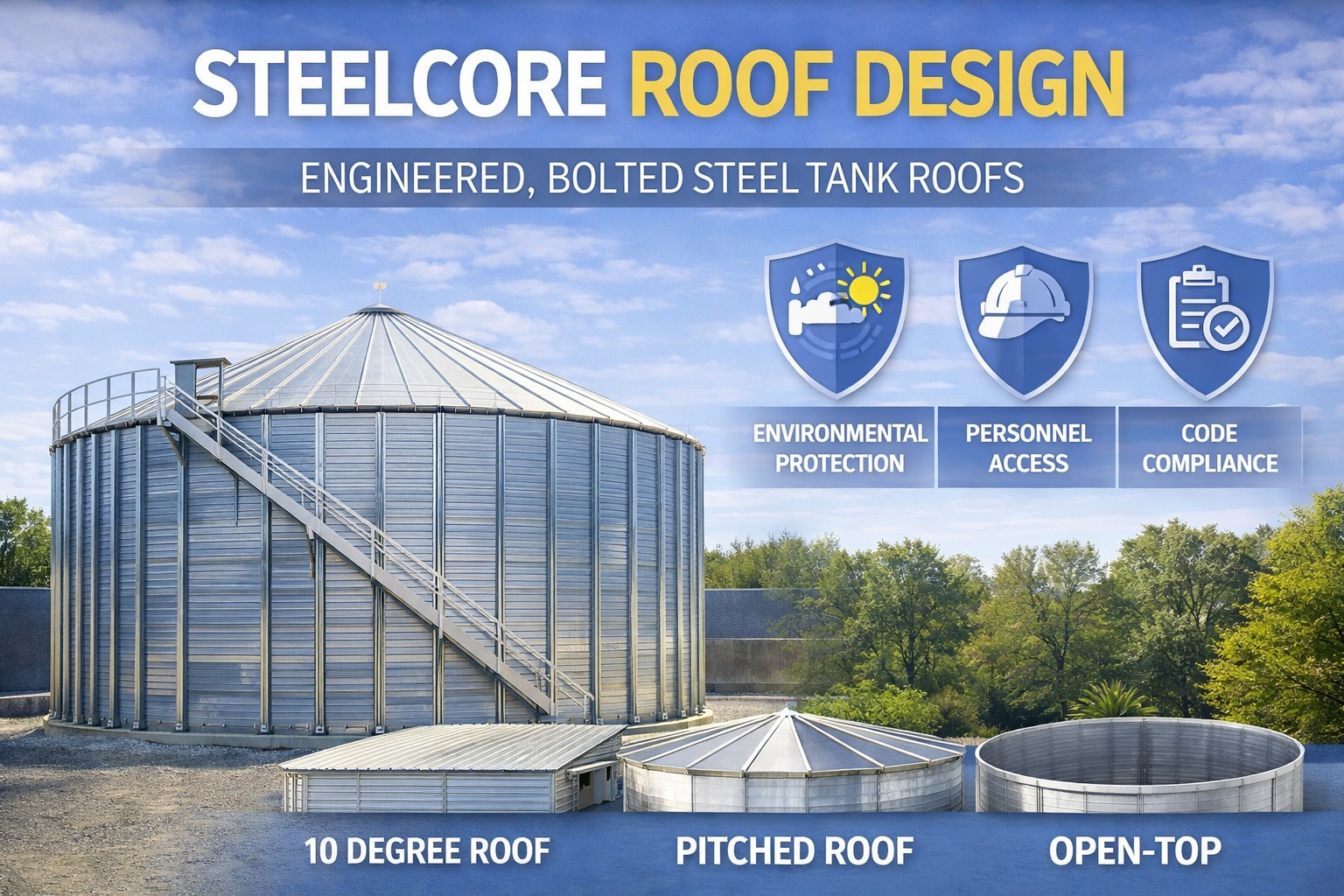
We are experts in custom applications as well as our standard 30-degree, 10-degree, and open-top tanks. Our tanks are also 100% compliant with all regulatory bodies, including OSHA, and feature safety features that other storage tank providers just can’t offer.
Why Roof Design Matters
The roof of a corrugated bolted steel tank serves many essential functions:
Environmental protection: Shields contain rain, snow, wind, and UV exposure.
Structural integrity: Helps the tank resist uplift, wind pressure, and load stresses.
Safety and access: Provides secure access for inspection and maintenance without compromising performance.
Regulatory compliance: Meets applicable engineering standards, including load requirements for snow, wind, and personnel access where applicable.
A poorly designed roof can lead to accelerated wear, water intrusion, and increased maintenance costs — all of which shorten your tank’s lifespan.
Common Roof Types & Configurations
Corrugated bolted steel tanks can be outfitted with a variety of roof designs to match project requirements and site conditions:
10-Degree
A low-profile roof option that provides durable protection in moderate climates and for applications where headroom or height restrictions exist.
Pitched Roof ( 30°)
Pitched roofs shed rain and snow more effectively and improve structural performance in areas with significant precipitation or load demands.
Open-Top Roof
Used when a full enclosure is not required, such as certain process or irrigation applications.
Each design can be paired with weather seals, gaskets, and engineered coverings to ensure a tight, long-lasting closure for your tank system.
Structural Load & Performance Considerations
A properly engineered roof must be designed to handle a range of loads and environmental stresses:
Wind loads: Roof systems must resist uplift and lateral forces according to site-specific wind criteria.
Snow loads: Roofs with lower slopes must support uniform loads as required by applicable standards.
Personnel and maintenance loads: Where roof access is required, live load capacity must be designed into the roof system.
These factors are evaluated in coordination with structural codes such as ASCE7 and applicable local building requirements to ensure safety and durability.
Materials & Engineering That Matter
Roof panels and structural members are precision-formed from corrugated steel to deliver strength and consistency. High-quality steel, cut and formed with modern machinery, provides uniform panel geometry and tight tolerances.
In corrosion-prone environments, roofs may be specified with protective coatings or enhanced finishes to resist long-term exposure. These treatments help reduce maintenance costs and extend service life.
Integrated Access & Safety Features
Good roof design incorporates access and safety elements without compromising performance:
Access hatches
Gauge and vent points
Walkways or anchorage for fall protection
Integrating these features during the design phase ensures the roof remains structurally sound while supporting inspection and maintenance activities.
Why Our Roof Designs Lead the Industry
At Steel Core Tank, we engineer roof systems tailored to each project’s operational and environmental requirements. Whether you need a flat or pitched roof, integrated access options, or coatings to withstand coastal conditions, we match roof design to performance. Our approach combines structural engineering, material science, and field experience to deliver tank roofs that protect your assets and reduce total lifecycle costs.
Get Started With a Roof Design Consultation
Interested in a roof system engineered for reliability and compliance? Contact us to discuss your corrugated bolted steel tank application and receive a tailored roof design solution.
2:12 Pitch most common Flat Panel, Clear Span, Raftered Sealant & Gaskets
ROOF DESIGN
J Rib: Structured/Raftered Roof Systems V Rib: Self Supporting Roof Systems Sealed and Bolted Flat & Open Top 10 degree and 30 degree Pitch
10 Degree & 30 Degree Flat & Open V Rib Roof
ROOF DESIGN
ROOF DESIGN
The steel used in roof panels is then cut into sections using CNC Press Brake to achieve the desired length as there is variation in roof panel length depending upon tank diameter. These sheets are then run through proprietary machinery that both “splits” the panel in two at an appropriate degree anfle and then “bends” both pieces (panels) into the desired rib formation be it our J-Rib or V-Rib.